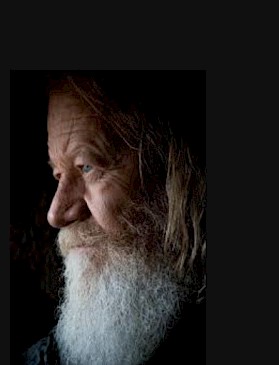
 I was born in 1951. I am now in the final stage of my life and I am ready to begin cautiously asserting myself as an Elder. And I would like to leave a legacy, contributing in whatever small way I can to the collective wisdom of humanity.
On December 21st John Vervaeke posted a long thread on X.
https://x.com/DrJohnVervaeke/status/2002788164843233475
You seek transformation.
I feel some cringe as I seek transformation to the status of Elder and I hope to revisit what Peter Limberger wrote about cringe.
This goes to the heart of L.A. Paul's book “Transformative Experience”.
She points to the way the possibility of such transformative experiences render you stupefied, because what they require is that you confront a deep kind of existential ignorance.
She first starts with an example.
Somebody offers you to taste this fruit that you've never tasted before.
You could hate it or love it.
But the thing is you don't know which reaction you're going to have until you bite the fruit.
I have not tasted the fruit of becoming an Elder. I may hate it. I may love it.
This is your perspectival knowing.
There's no way of knowing that ahead of time.
You have to go through the experience to know what it is like to have the experience.
As an Elder, I have a unique perspective (everyone does) built by how I experienced life.
I was born in 1951 and I have experienced life as a Baby Boomer.
I was born a white male making my experience different from people of color and women.
In 1954 we moved from the Netherlands to Canada and I have experienced life as a Canadian, moving from Nova Scotia to Alberta in 1969.
We had no television while I lived at home. As a teenager I discovered that I Love Books and books have shaped my life. There are several books to be published in 2026 that I eagerly await.
In 1968 Kenneth H. Cooper published a book, Aerobics, which impacted my whole life. Because of it, as a teenager I began to run. I discovered that I love to run and continued to run throughout my life and I am still going strong on my treadmill at 74.
I left home at 17, a decision I never regretted. At the time I needed to get away from my father and I have written about My Experience with Pa. This is a very different experience from those who come from loving families and those who do not leave the nest until well into their twenties.
At 18 I joined a church which turned out to be a cult. I stayed for twenty-five years. I have a deep understanding of the mind of a True Believer because I lived it.
At 19 I chose my profession, Accountant, a good choice for me. My 43 year career began as a clerk and ended as a Chief Financial Officer. I hope to find time to write much more about My Career.
I met my wife, Pat, in our cult. We married young and are still together. I have a deep understanding of an intimate relationship that spans decades. But I have no experience as a divorcee. And we have no children so I have no experience as a father.
I exited a cult at midlife and I have a deep understanding of what that entails. I have written in detail about My Spiritual Journey. I have not arrived and the journey continues, hopefully until I reach 100.
Also at midlife, I joined the Canadian Mental Health Association as a Board Member. I served for many years at the local, provincial and national levels. I served for three years as the first CFO of the Mental Health Commission of Canada which launched in 2007. I gained much knowledge of mental illnesses and mental health. But more importantly, I have lived experience, a life-long struggle with depression and anxiety. But currently in retirement I am living the best years of my life with very good physical and mental health for which I am very grateful.
In 2012 I retired and moved to Mexico and began experiencing a new culture. Our community is a mixture of Mexicans and expats, in many ways not the “true” Mexico. It is my intention to stay here for the rest of my life.
In 2019 I discovered metamodernism and I dove in deep. I soon discovered John Vervaeke, Peter Limberger, Gregg Henriques and many others. I cannot unring the bell of metamodernism but I try to hold it lightly.
The young can be intelligent and the young can be wise and I know some who are both. But they cannot be elders. That takes lived experience over an extended period of time.
More from John Vervaeke:
A personal transformation: This is knowing not just by having a particular perspective. This is knowing by having the agent–arena relationship (that makes a world show up for you) reorganized. It’s a restructuring of who you are (agent) and what the world is for you (arena) at the same time. And you don't know what it's like to be that person in that world, because you have to actually be changed and the world has to be changed in order for you to have that participatory knowing.
My lived experience gives me a particular perspective. But now I seek learning about elderhood via participatory knowing. And although the experience of others cannot be mine, they are of interest to me.
Catching my eye very recently is Jody Day, who writes Gateway Elderwomen.
Eldering is a verb - Surviving your own bullshit
Perhaps once we accept that we’re not getting out of here alive, no matter what we do or don’t do for our health, and that our appointment with death is written in invisible but indelible link—we can finally loosen our egos grip on life, lighten up and finish (or start) growing up so that we can be of meaningful service. Because surely the point of wisdom is not to hoard it; it’s to give it away.